By Emmanuel Williams
When you look up what genres of fiction are most popular, you are confronted with the popularity of Speculative Fiction. It is the most imaginative fiction because it speculates on what could be instead of using elements found in the real world. The most popular speculative subgenres are Science Fiction, Fantasy, and Horror.
These subgenres may be defined by their conflict. “Man vs ___.”
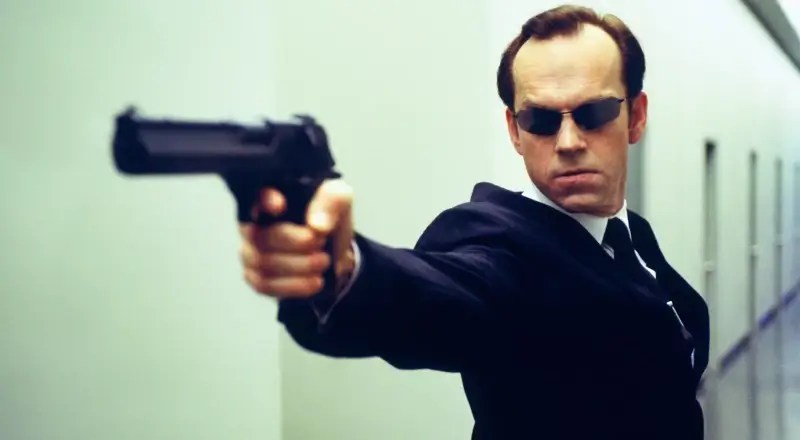
In Science Fiction, like The Matrix, the conflict surrounds a future in which Machines operate an elaborate program called the Matrix to keep our minds busy while they use our energy for fuel, while only one city truly survives. Zion. According to our minds we are walking, talking, eating, buying homes and raising children. But in reality we are born, bred, and kept in liquid filled eggs attached to wires carrying energy to the Machine City. In the end, Neo, who was meant to break this system and use it to his own will, must face the machines in order to save what’s left of the real world, and the ones awakened from the illusion of The Matrix. Zion.
Man vs Machine.
But the machine may be a time machine (The Time Machine), war ships, armies of clones and droids, and a mysterious force of light and dark energy harnessable by those sensitive to it (Star Wars). Believe it or not, the adventures of Iron Man and The Avengers, indeed most of Marvel Comics surrounds a Machine as the enemy, usually built by mankind yet has gotten far out of control.
In Fantasy, like Harry Potter or Lord of the Rings, you have a chosen one meant to save the world, usually his world, from an evil magician set on mass obliteration of the world as the hero knows it. Harry finds out he is the only wizard to withstand the death curse as a child and ends up fighting off the same evil wizard who kills his parents 6 times before finally vanquishing him for good. Voldemort would have murdered anyone who wasn’t of pure magical lineage, which meant everyone that Harry cared for and the majority of the Wizarding World.
Frodo, a hobbit, was given the important task of keeping a ring safe from its creator, an evil mountain sorcerer called Sauron, while he and his companion Samwise Gamgee travelled from The Shire to Sauron’s mountain to throw the ring back into the fire, the only way to destroy it, before Sauron could wield it to control the other rings given to the rulers of the realms of elves, men, and dwarves who all lived across the vast Middle Earth. Without Gandalf the Wizard, the entire journey would be unsuccessful.
The conflict usually surrounds good vs evil Magic, magicians, or an entire magical world.
Man vs Magician.
In Horror, like the novel Carrie by Stephen King, the conflict usually surrounds avoiding/battling/escaping a Monster. In this case, Carrie provides the protagonist and the antagonist. We go to school with her, we go through her being bullied, taunted, and tormented. All while she comes to terms with a telekinetic power enacted by her emotional distress. King even gives her the attractiveness of a wrinkled potato so when she gets to go to the prom and it turns out to be a huge joke about her becoming a woman in the girls locker room it all goes haywire. She locks them in the gymnasium during the dance, kills most everyone on a rampage through the city wreaking havoc with her mind, kills the mother who’s been trying to shove Jesus so far down her throat it may have emptied her soul instead of filled it, and somehow ends up dead, too.
All on prom night.
Carrie is the epitome of, and literal poster child for, battling the internal monster, only to become the external monster.
Man vs Self.
Man vs Monster.
Genres like Thriller, Action, and Drama are not Speculative Fiction genres, so you must pardon me for not including the all too common Man v Man. There are plenty of examples of that, although I wouldn’t mind telling you that the Vengeance Plot is very popular in fiction. Where someone close to the hero is discovered to have been murdered, and the rest of the journey centers on hunting down the villain, vanquishing his henchmen first, then finally achieving justice. Whether or not the villain is murdered in an eye for an eye manner varies by author and somewhat by franchise.
For instance, in the Fast and the Furious franchise, they tend to come back in future films, but in recent Jason Statham films, sayonara asshole.
If you’re counting, that’s fiction’s 5 greatest enemies. If you think I left out serial killers, those are Man + Monster. On that note, feel free to mix and match if you’re a writer like myself.
- Myself
- Mankind
- Magician
- Machine
- Monster
What makes them the greatest? They are not only the most common, but they are the most interesting villains of all time.
I’ll leave you with a tip. Instead of writing a tale about these enemies separately, take a page out of King’s book and start with Man vs Self vs ____.
Everyone has inner demons, choose a universal one or two for your protagonist, and perhaps something more fringe inner demon for your antagonist. Unless you’re telling a cautionary tale, then your antag will need a more common tragic flaw.


Leave a comment